

A Photographic Approach
I have been doing concert and street photography for about eight years. In my music photography, I always try to capture the emotions of the artists especially the intensity and passion in extreme music. I work with fast moving subjects and constantly changing light, which makes every shot a challenge. One thing I never liked is when an artist notices my camera and poses. For me, that kills the natural moment and breaks the emotional flow.
In my street photography, I follow the same approach. I shoot strangers in places I like to revisit, looking for unique moments that reflect the spirit of the street and the surrounding architecture. I chase light and shadow, always aiming for a strong visual mood. I have always loved black and white photography, and almost all of my work is done in black and white.
Inspired by the photo series called “rolling stones fans” by Joseph Szabos I decided that this project would be a combination of my two main styles: music and street photography. I followed my usual way of working unposed, black and white, and focused on real emotions. This time, however, I turned my camera away from the stage and into the crowd.
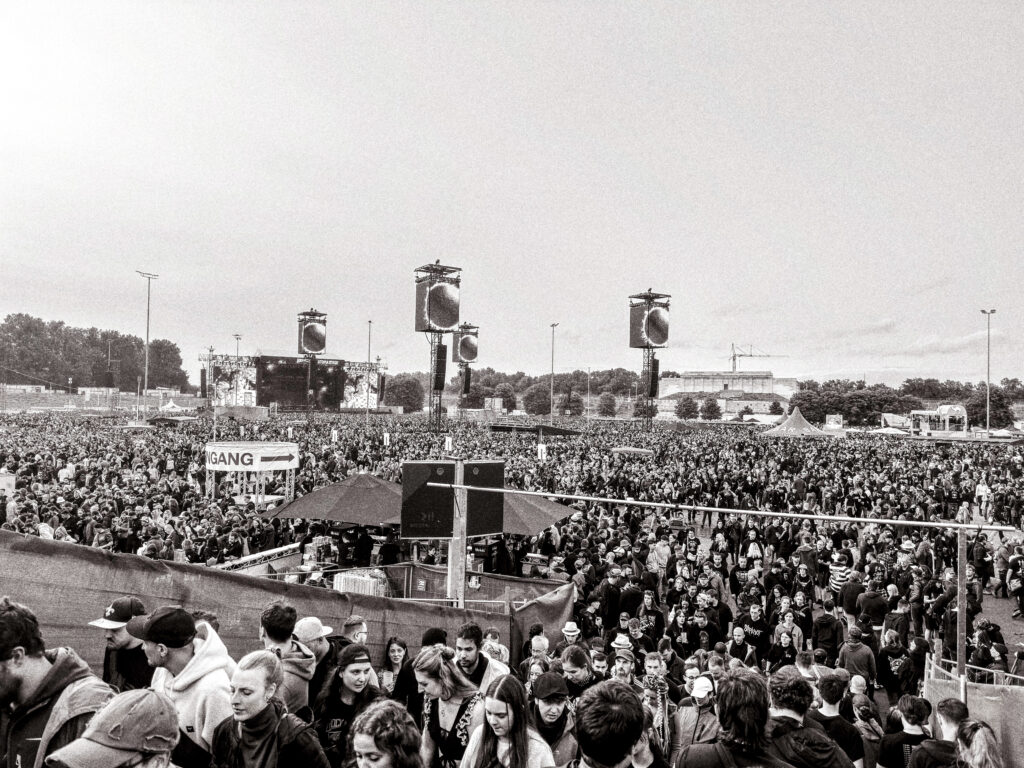
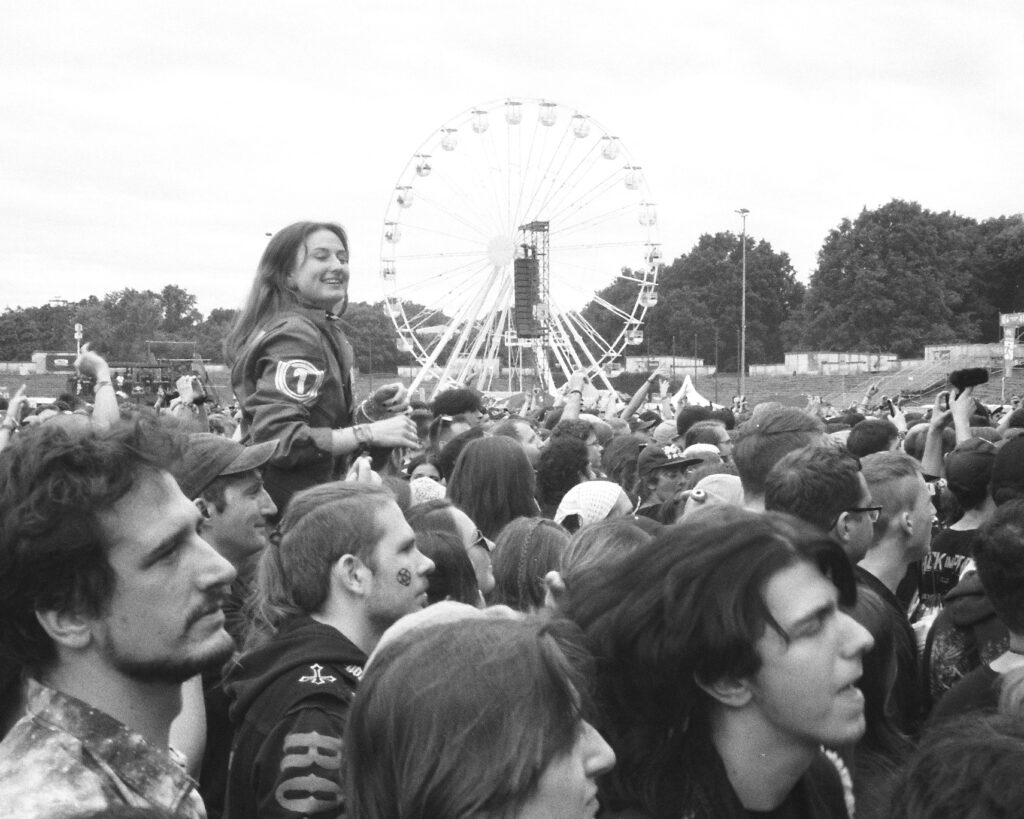
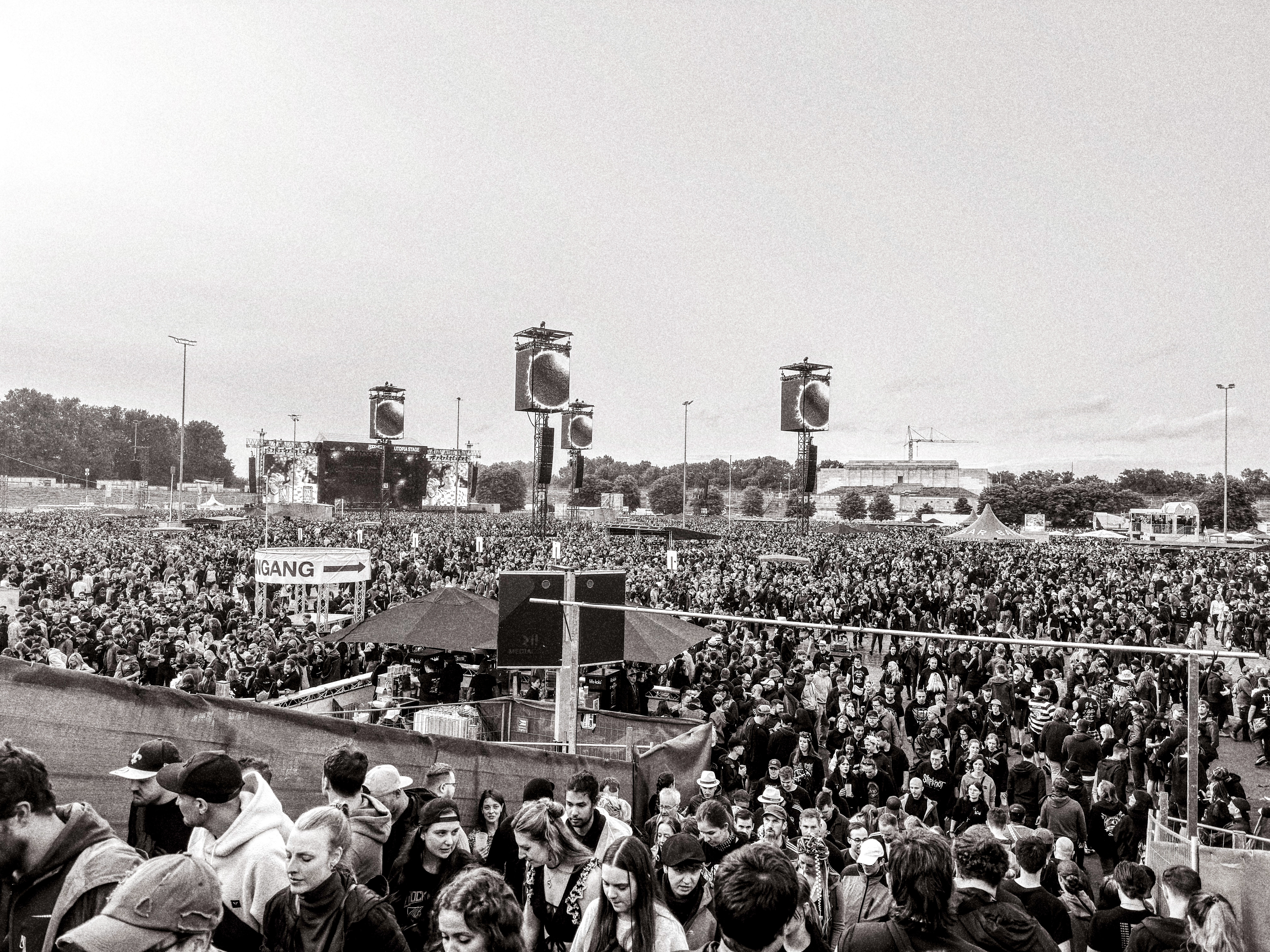
I documented the Rock im Park festival, one of Germany’s biggest and longest running rock festivals. The festival has been going strong for over 30 years and is more than just a place for live music. For many people, it’s an annual ritual, a celebration of freedom, peace, and human connection. It doesn’t matter which bands are playing; what matters is being there, surrounded by music, people, and emotion.
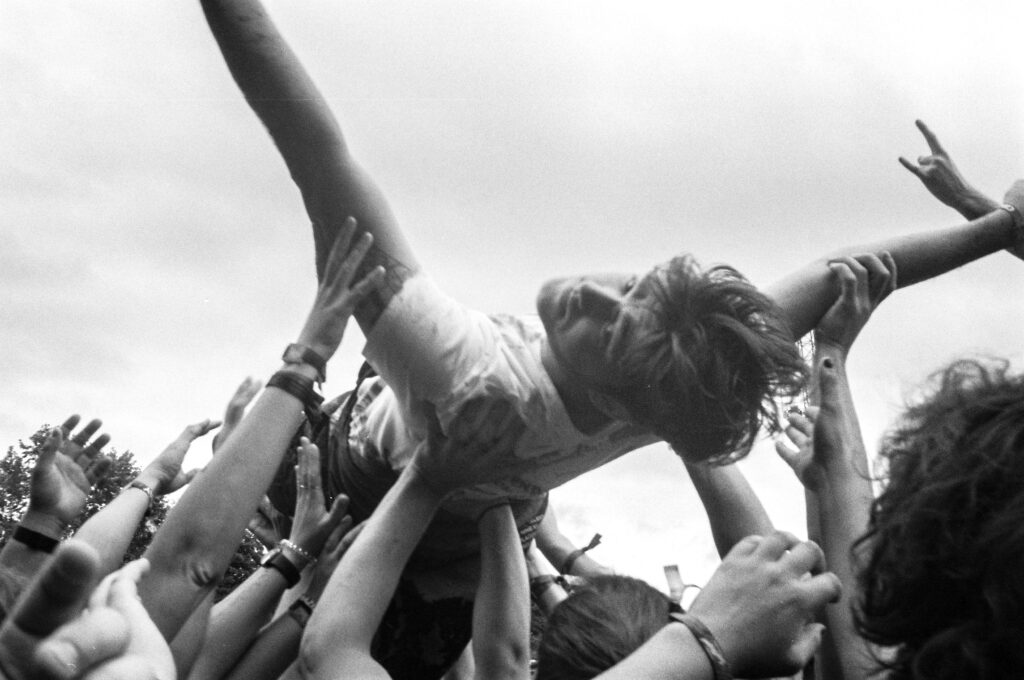
I wanted to capture how people act and enjoy in their most awaited time of the year.
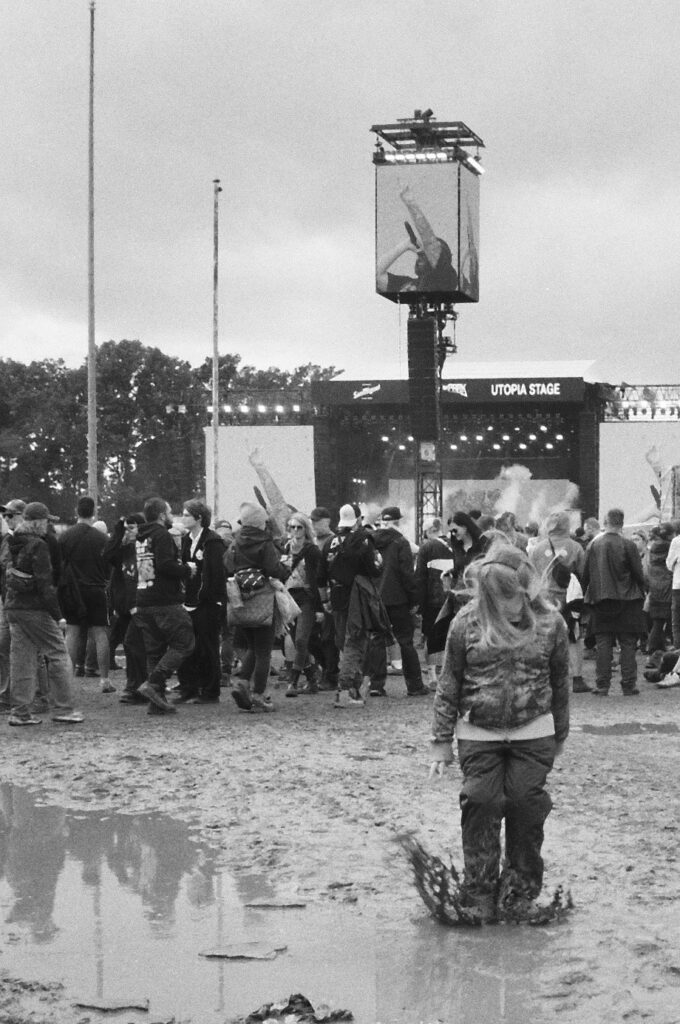
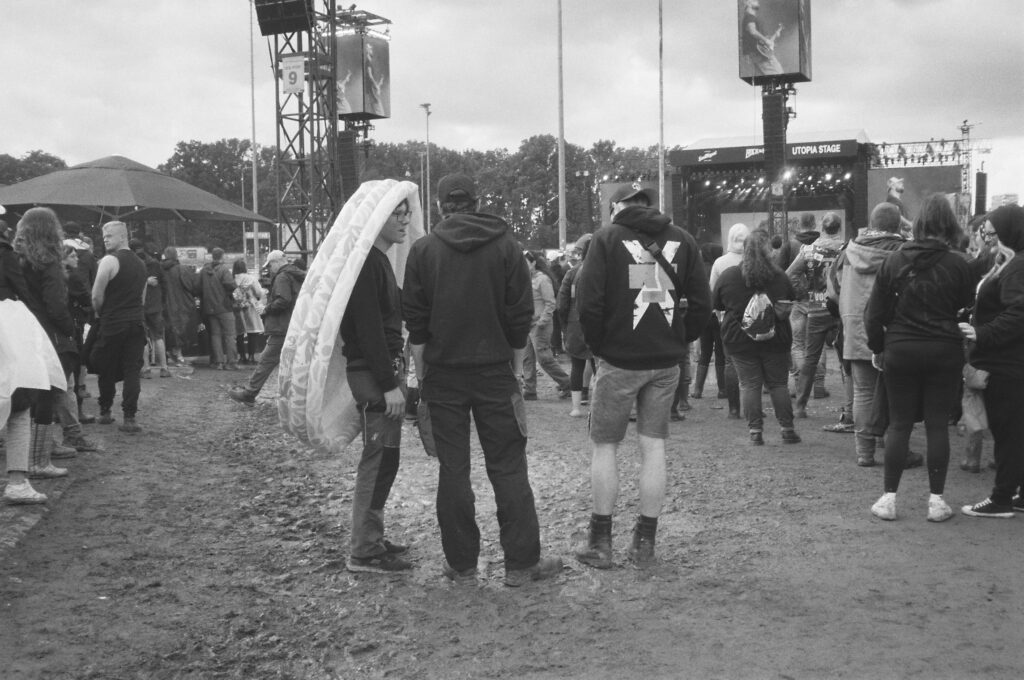
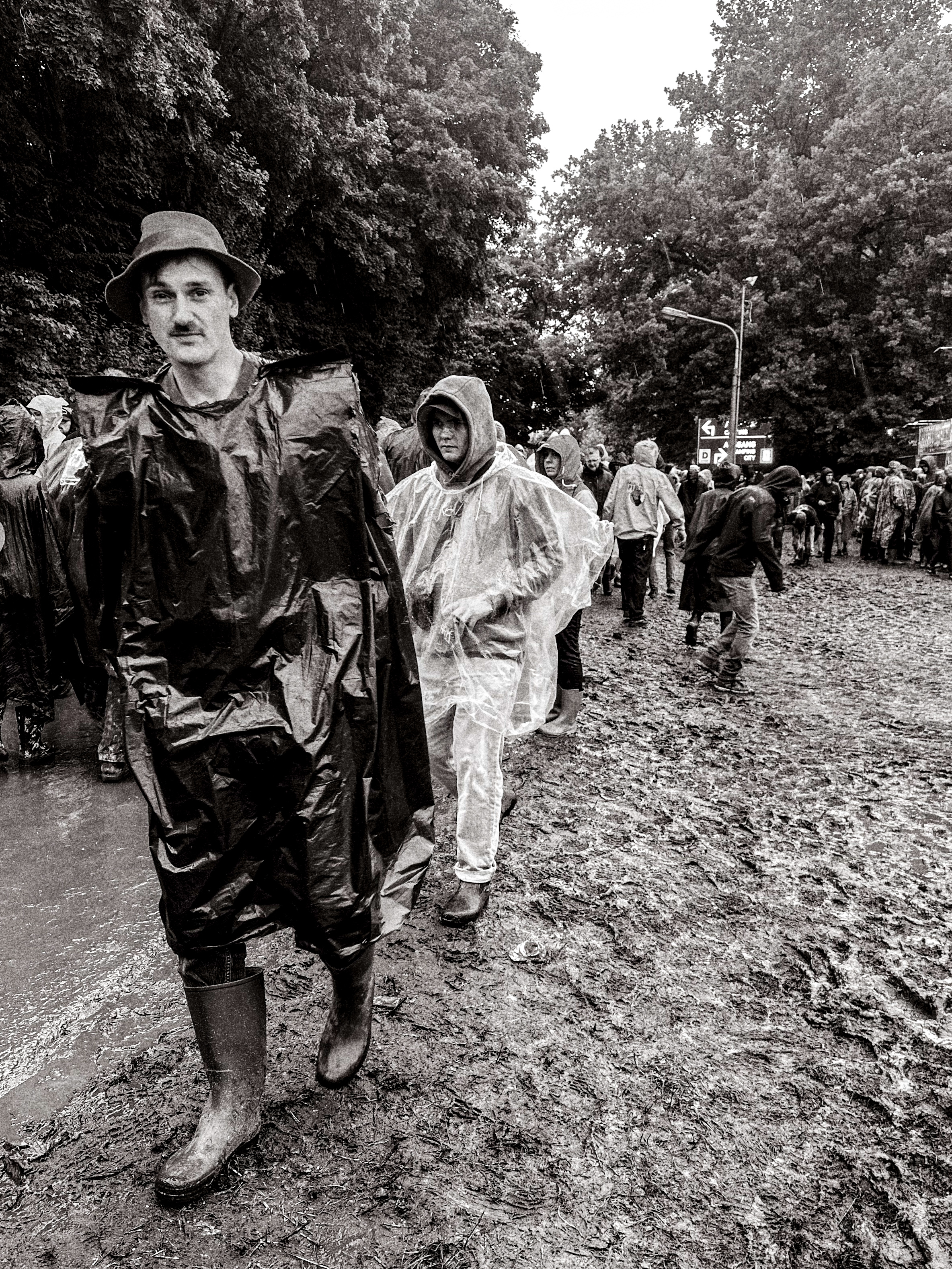
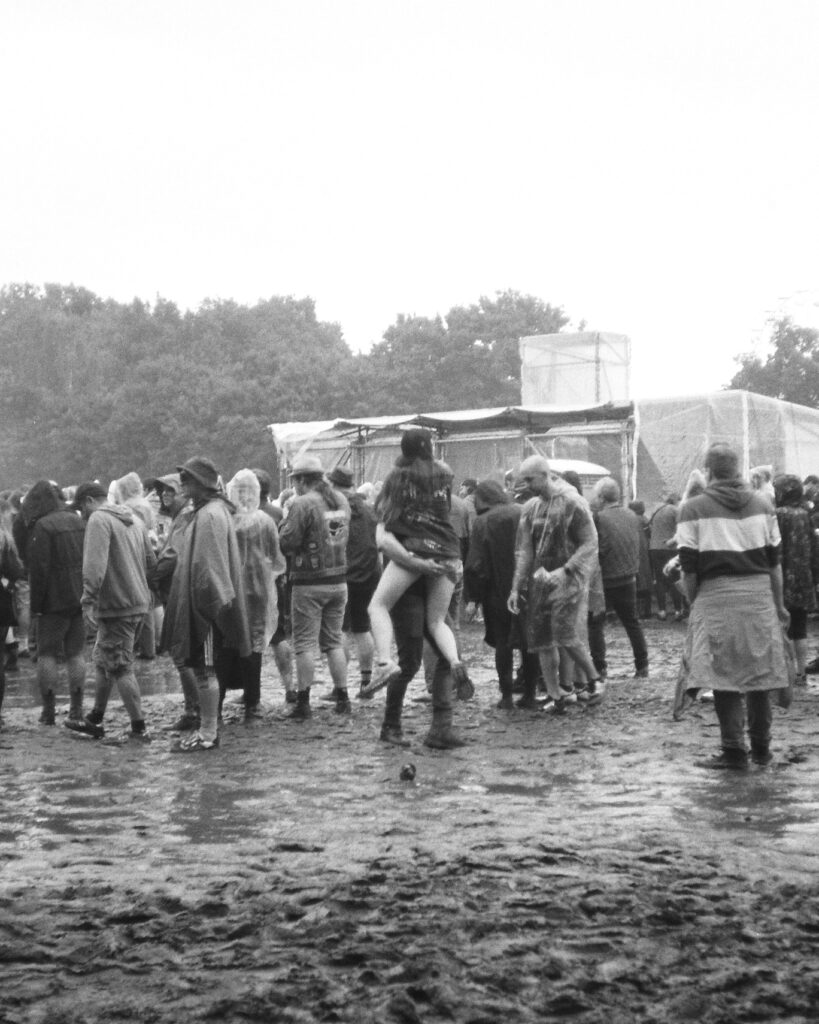
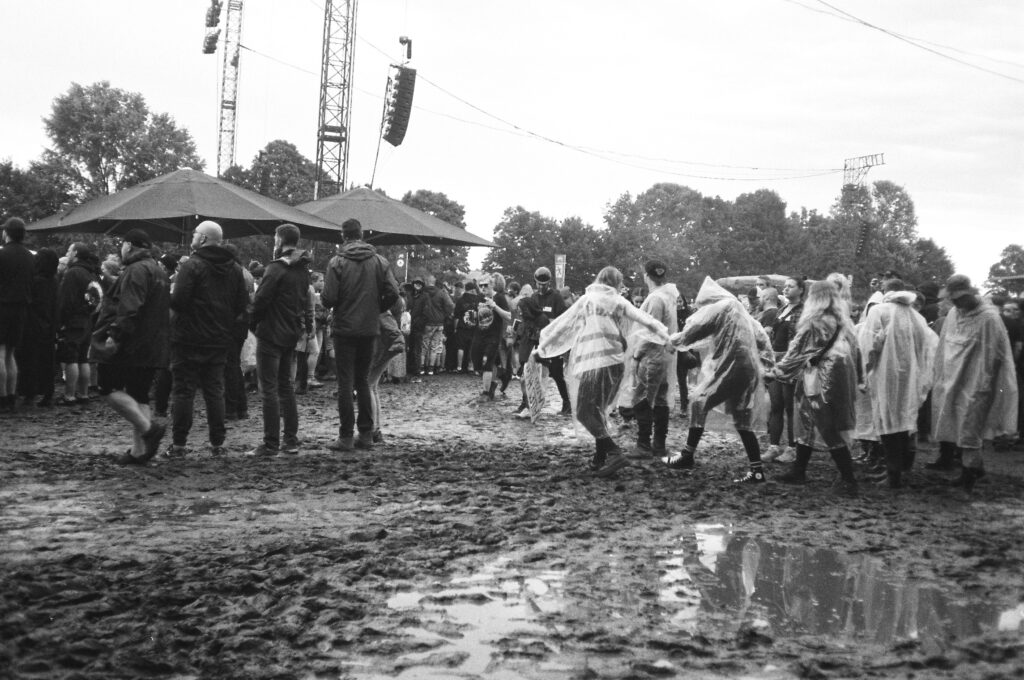
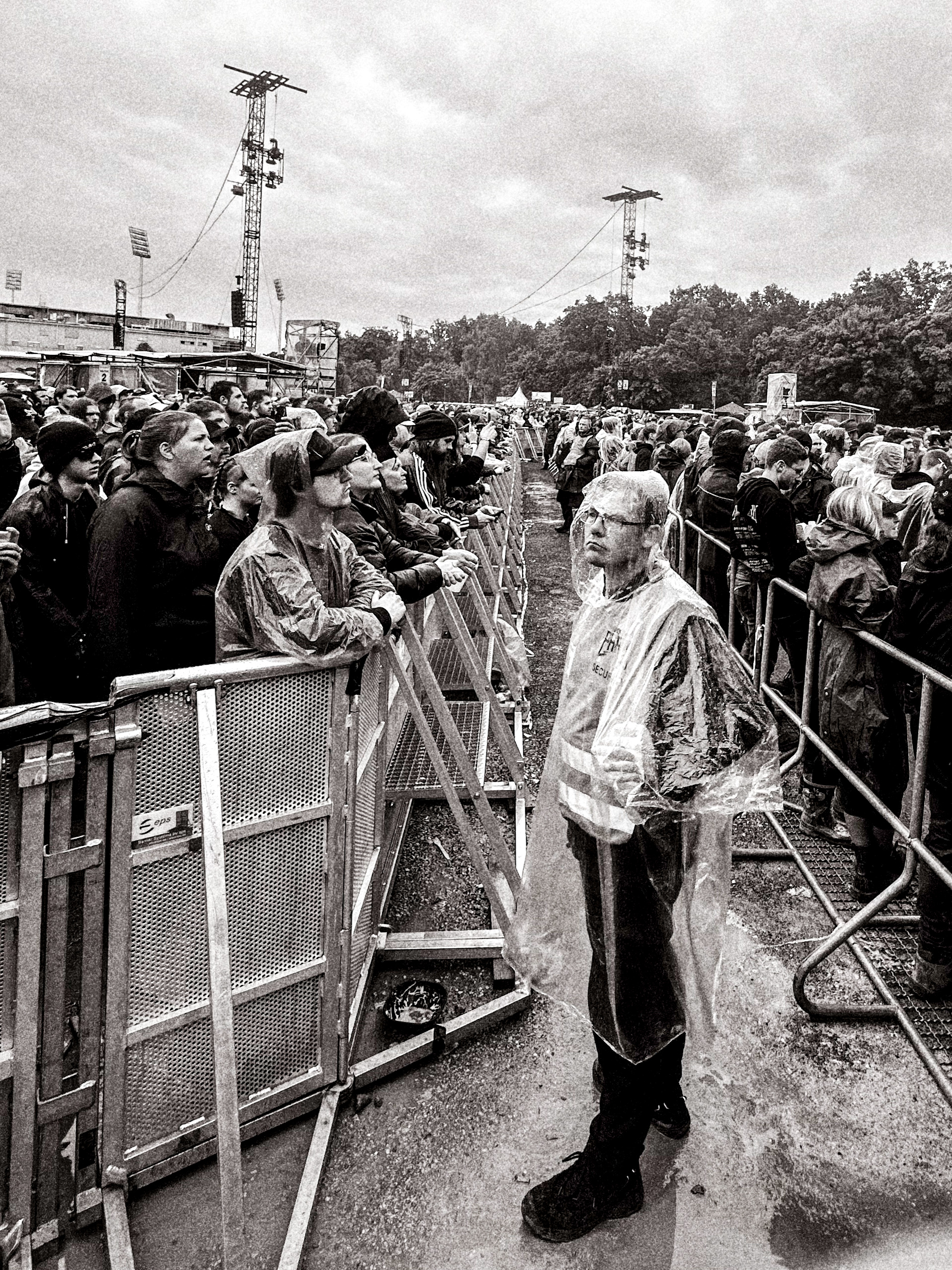
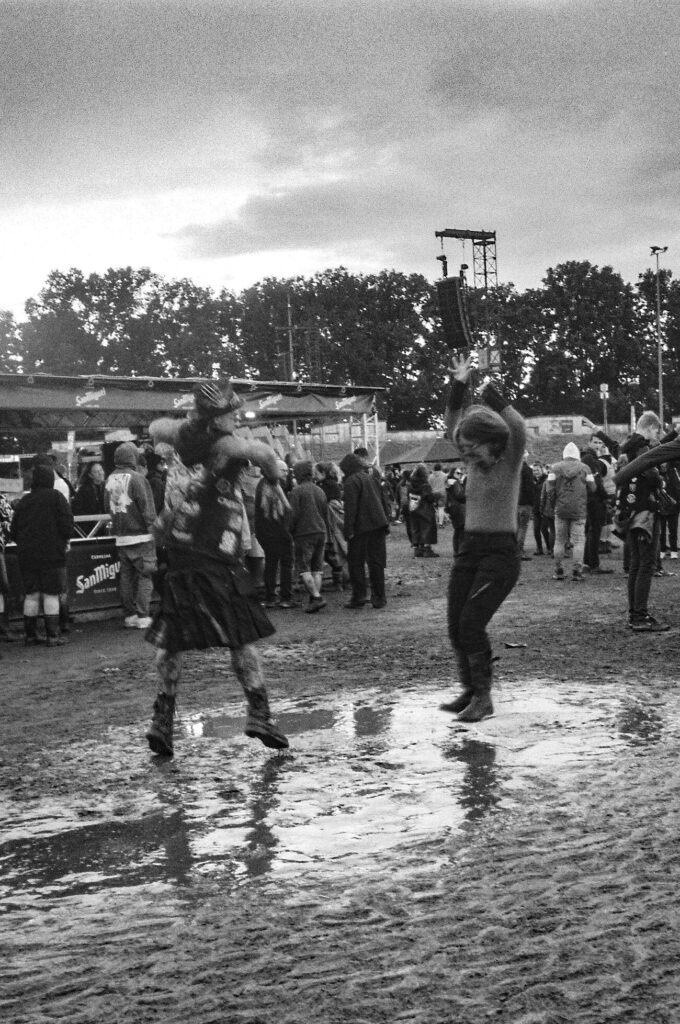
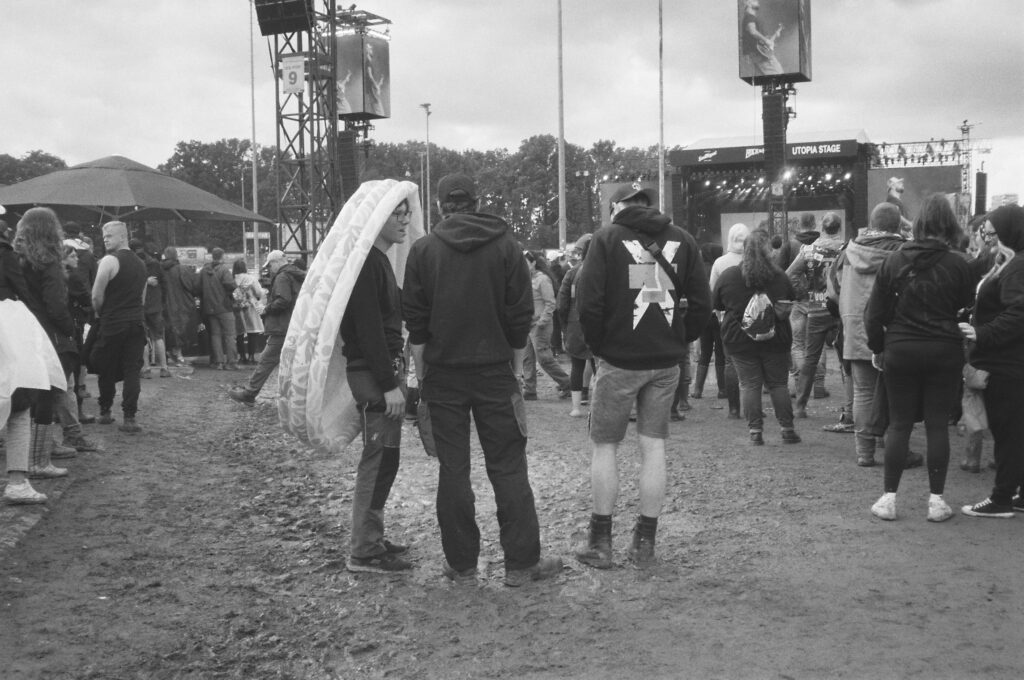
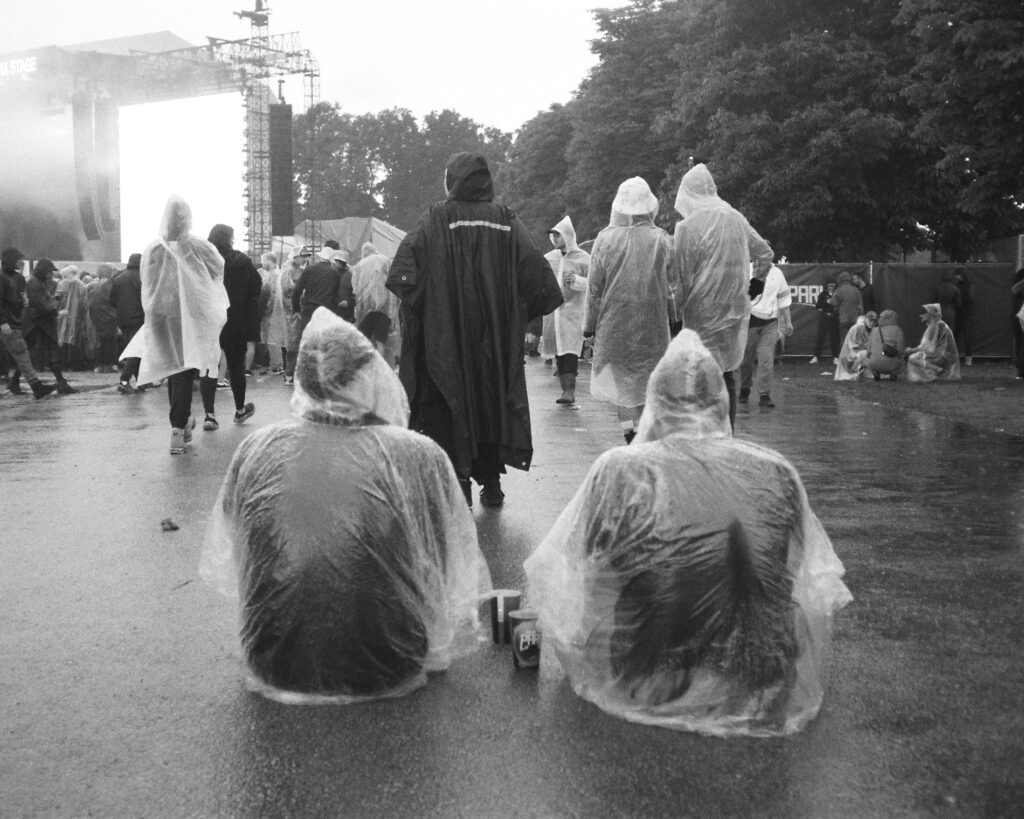
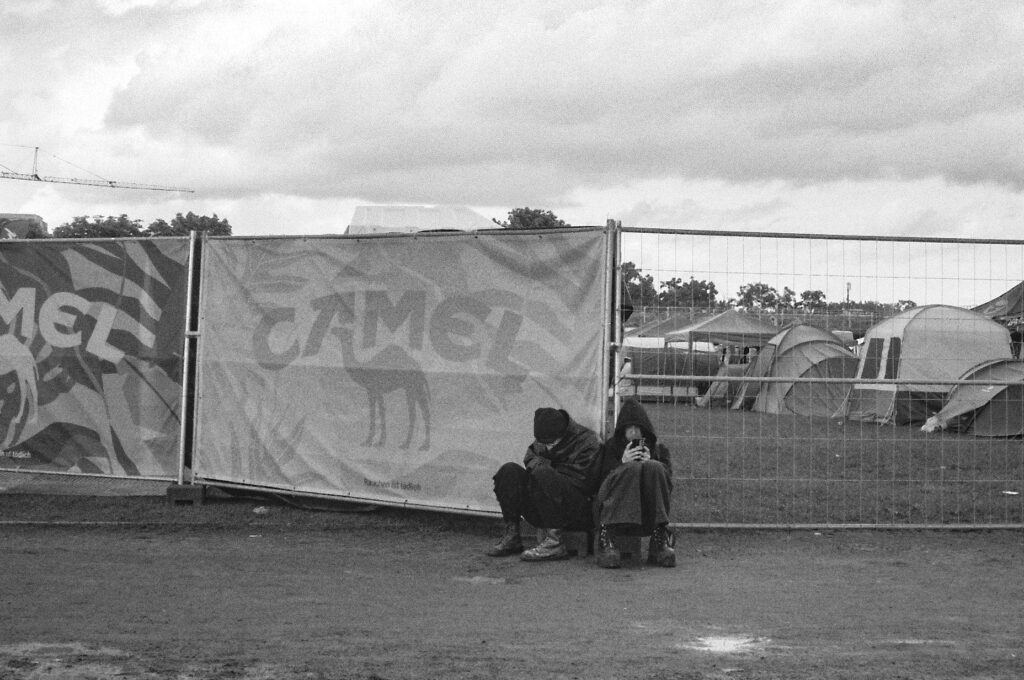
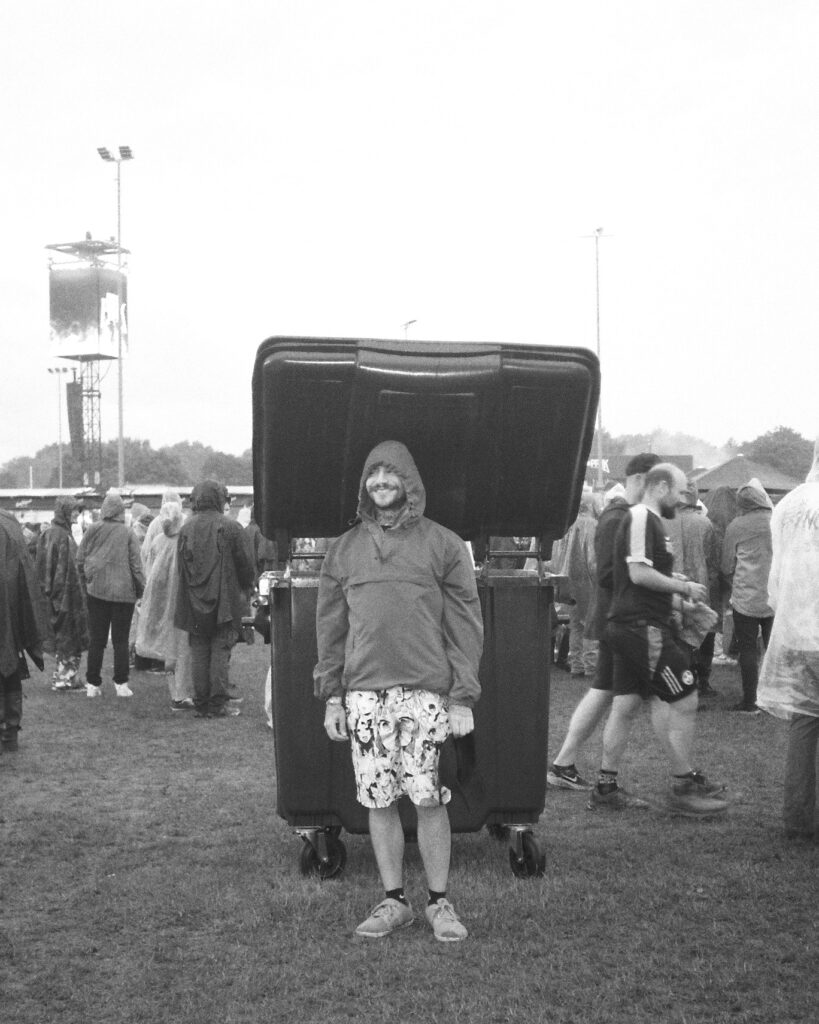
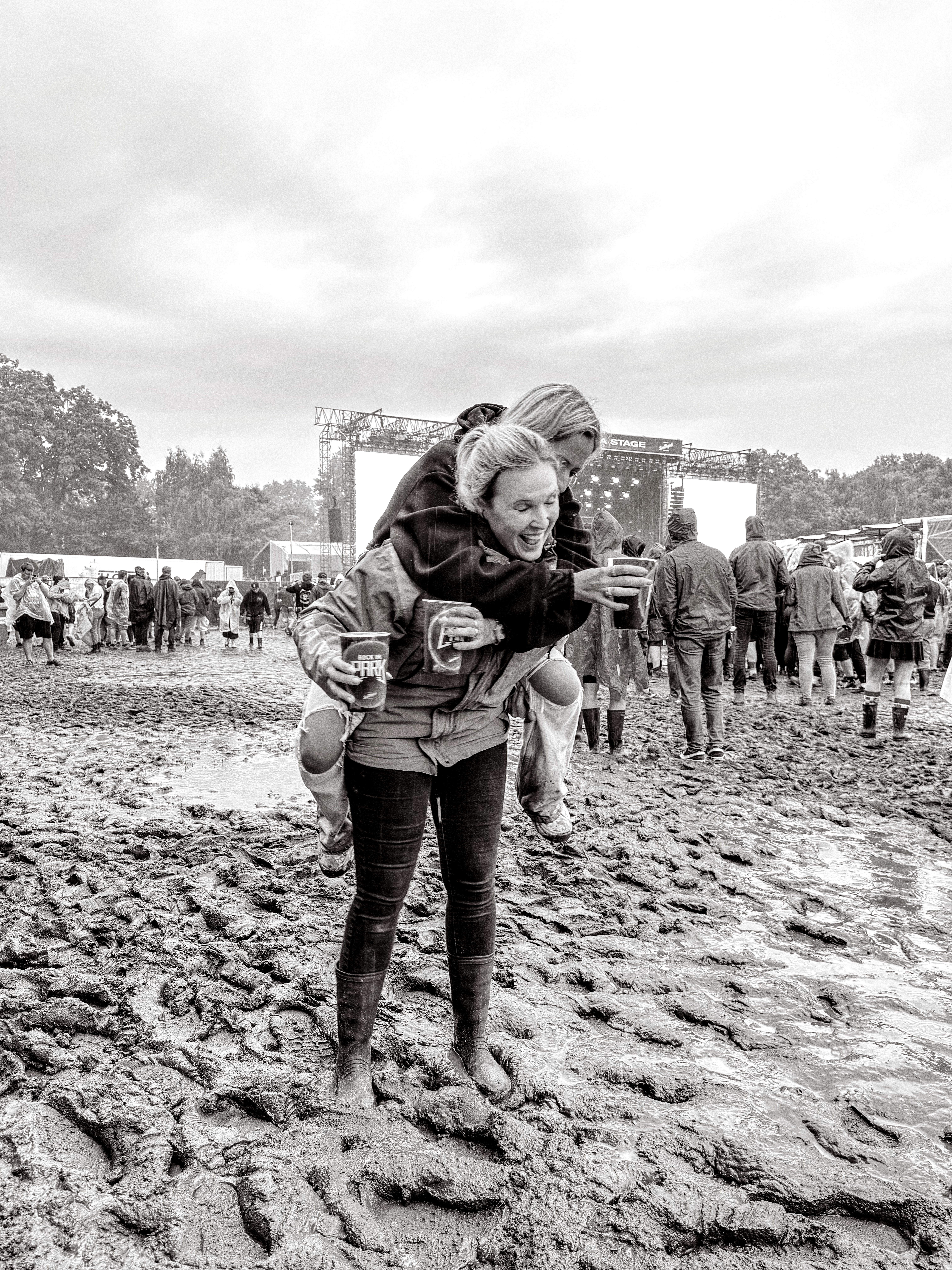
This year, the festival was hit with three days of nonstop rain. The grounds became muddy, cold, and difficult. But people kept dancing, laughing, celebrating.
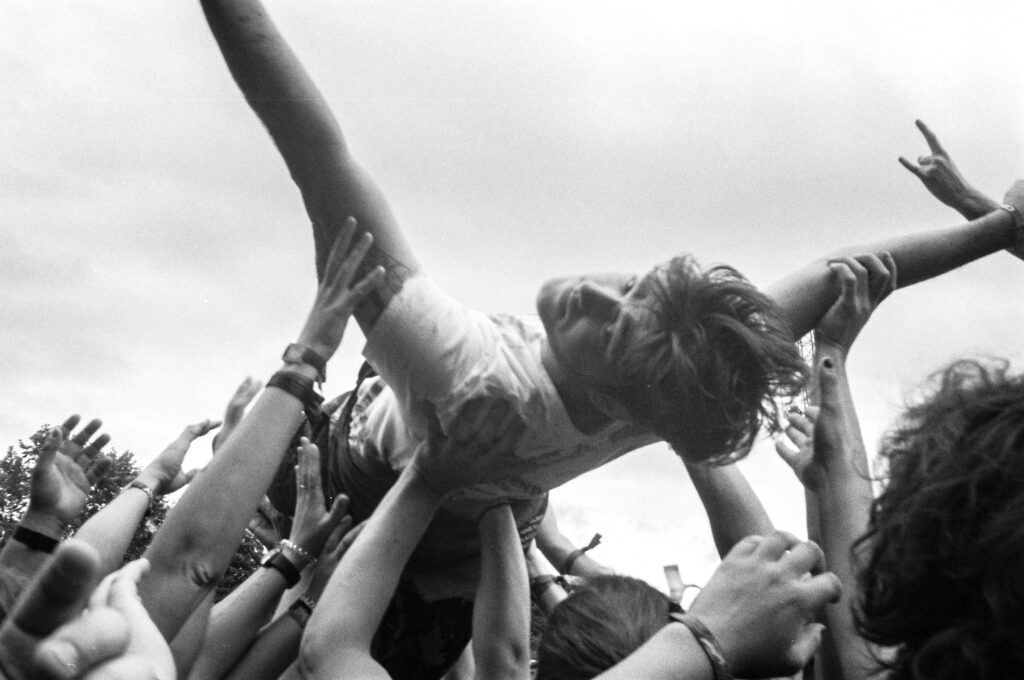
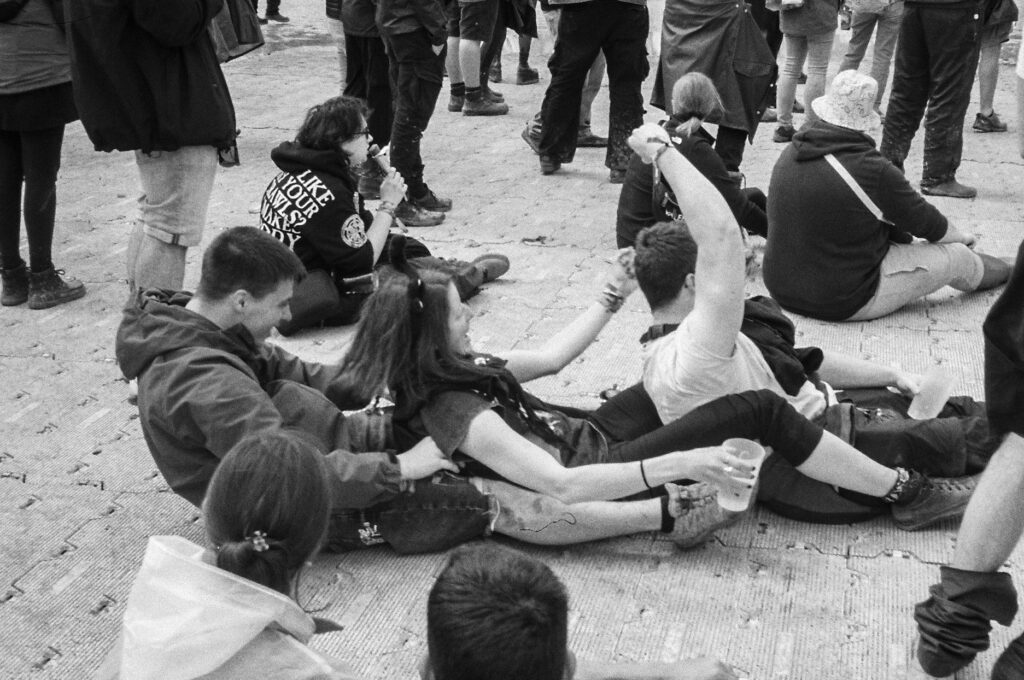
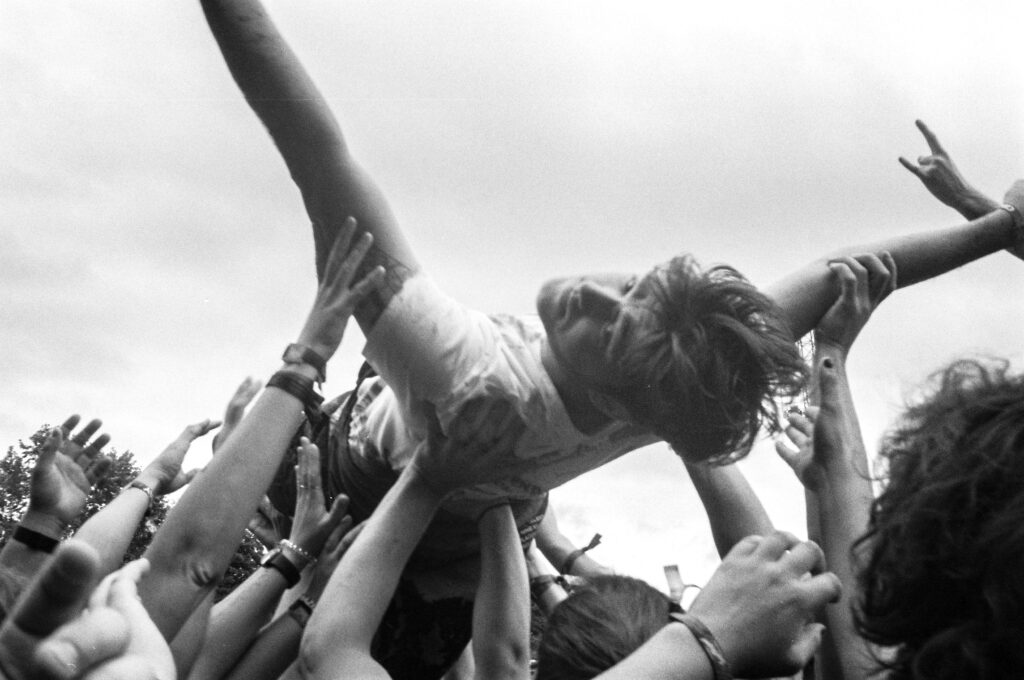
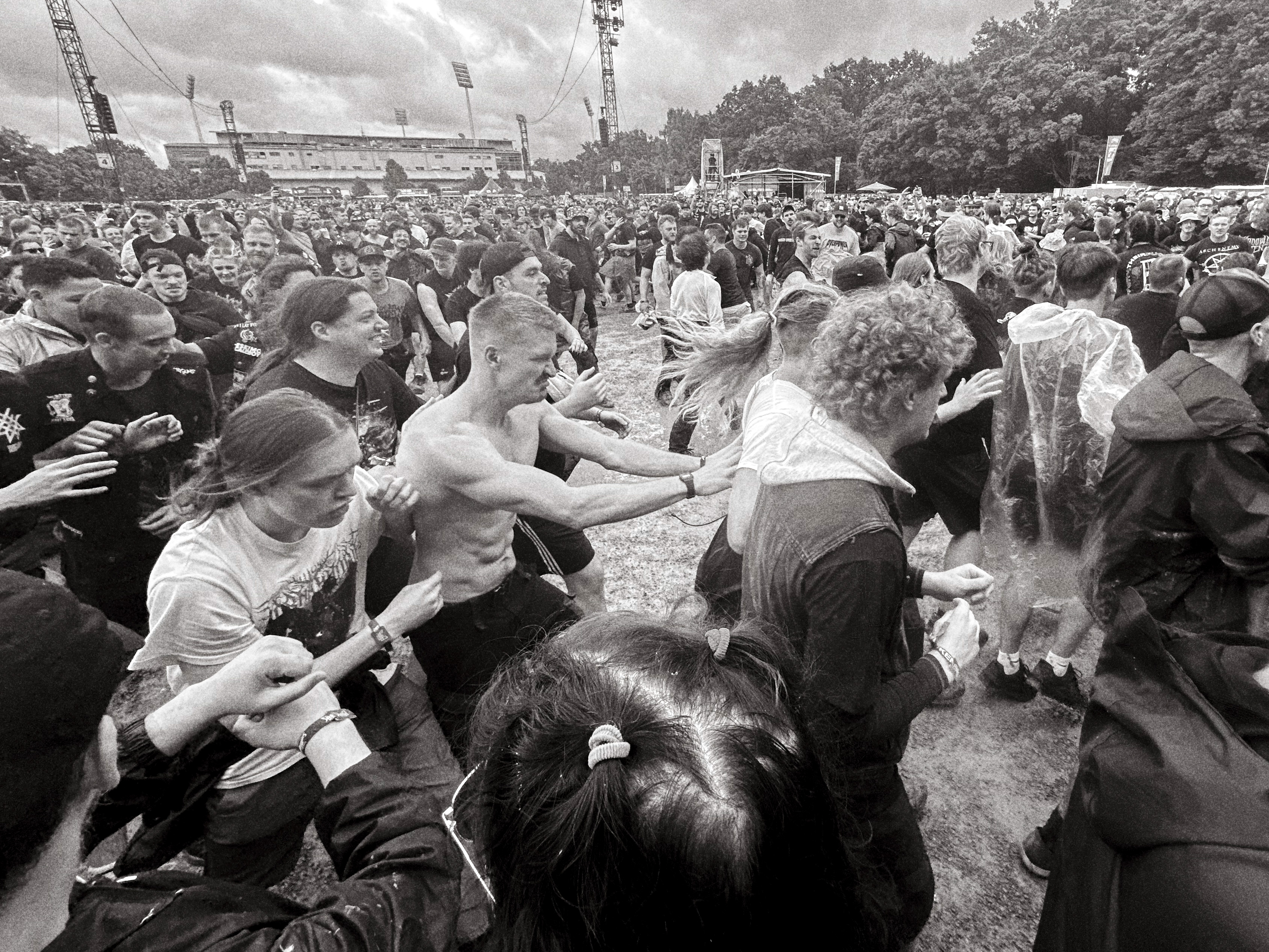
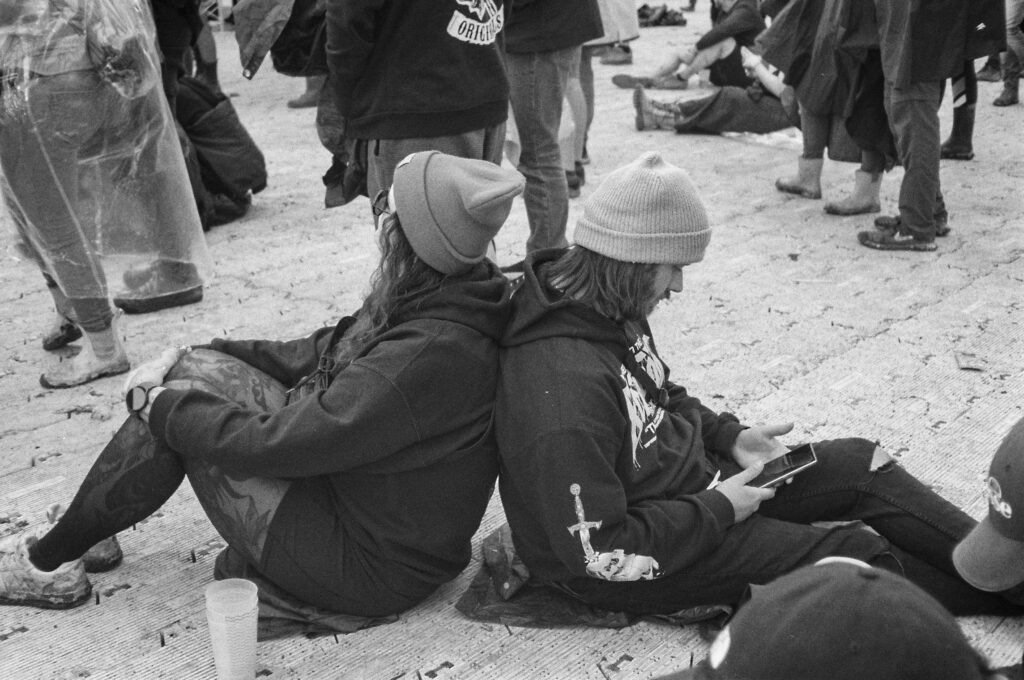
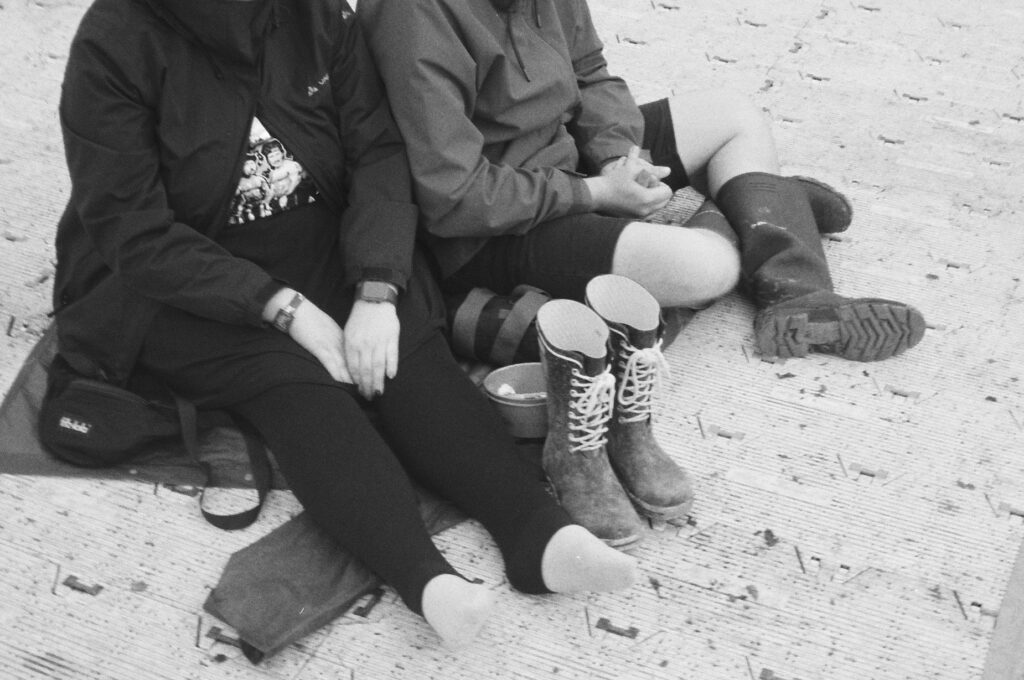
I wanted to capture that spirit. How people still found joy and freedom despite the discomfort of heavy rain. The photos in this series show individuals in that environment: soaked, dirty, cold but alive and connected. Music allowed them to forget their daily routines and responsibilities. For a few days, they were simply present.
The Camera
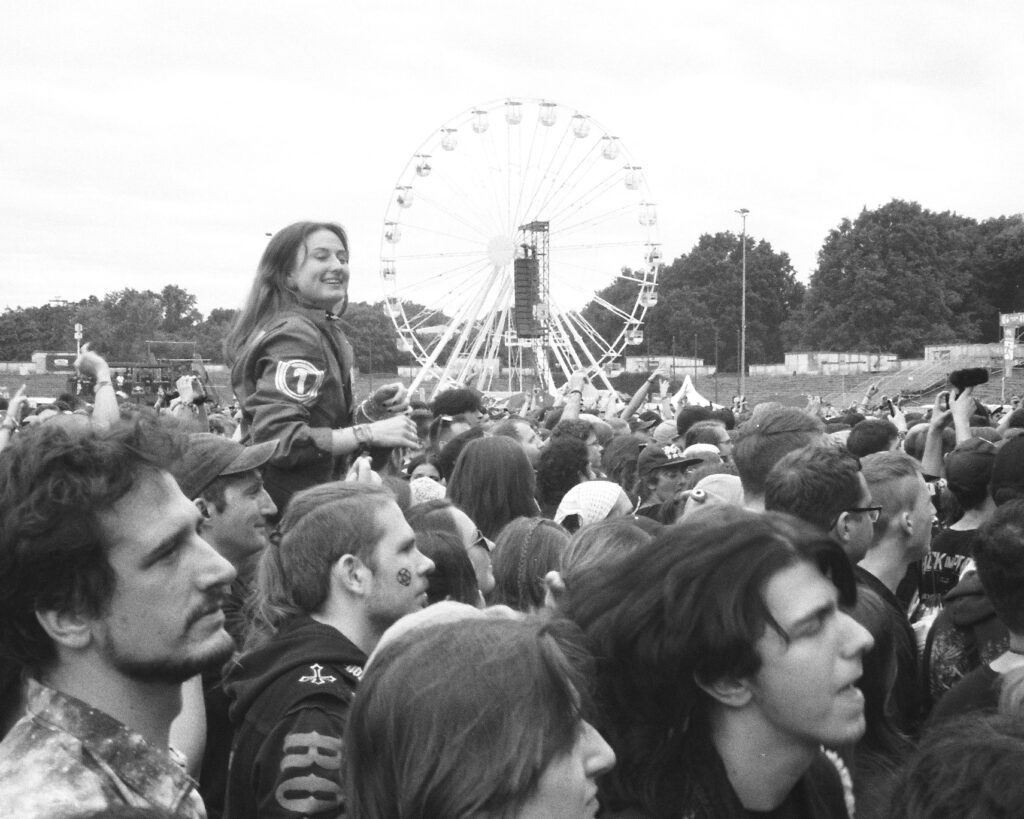
At the start of the festival, I used an analog point-and-shoot film camera. Cameras with interchangeable lenses are not allowed without a permit in the festivals. I chose film because it slows me down, makes me more mindful, and of course the analog texture. In line with my photographic style I decided to shoot in black and white and focus on emotion, light, and contrast. For me, black and white feels closer to the soul and texture of a moment.
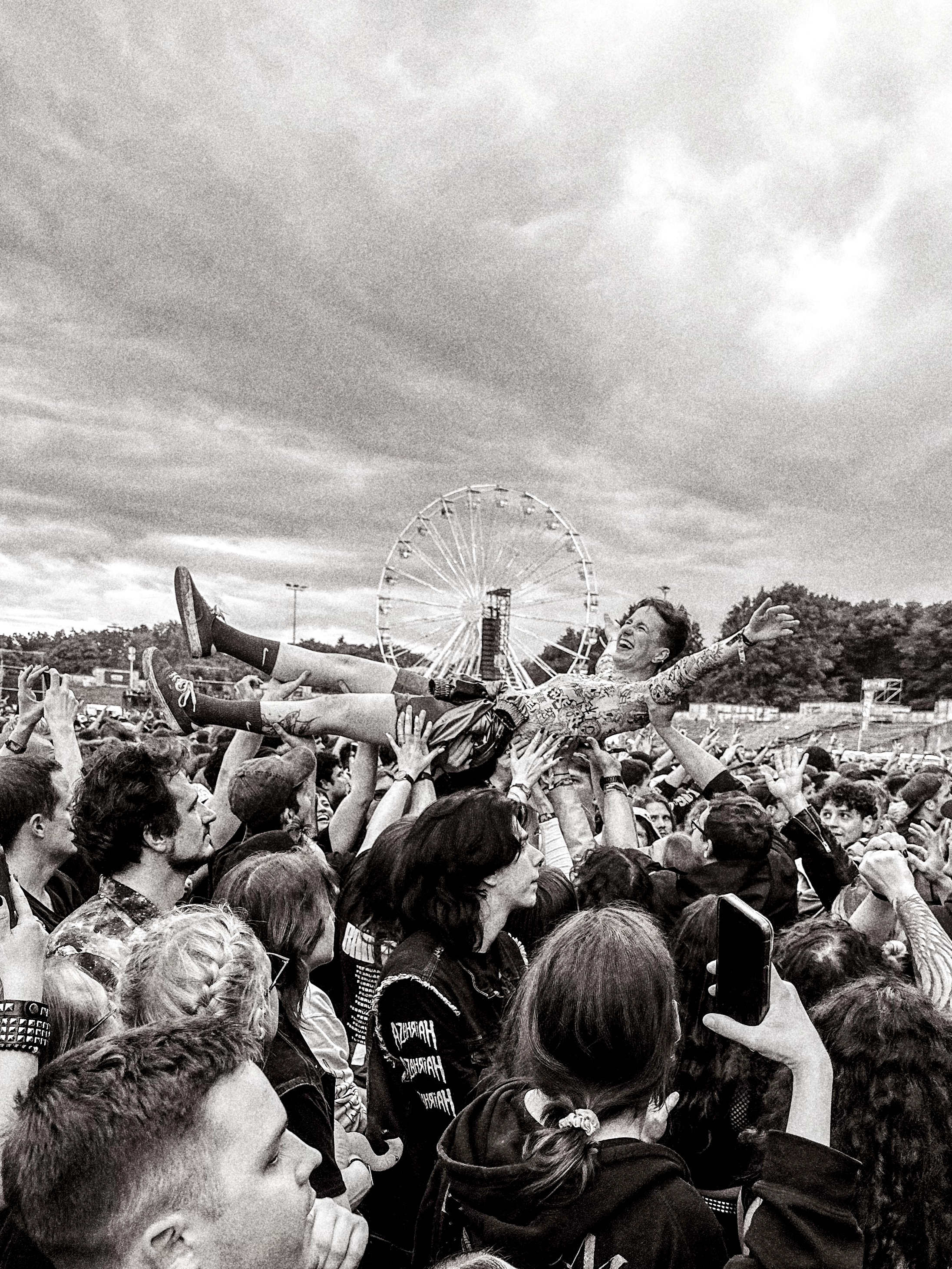
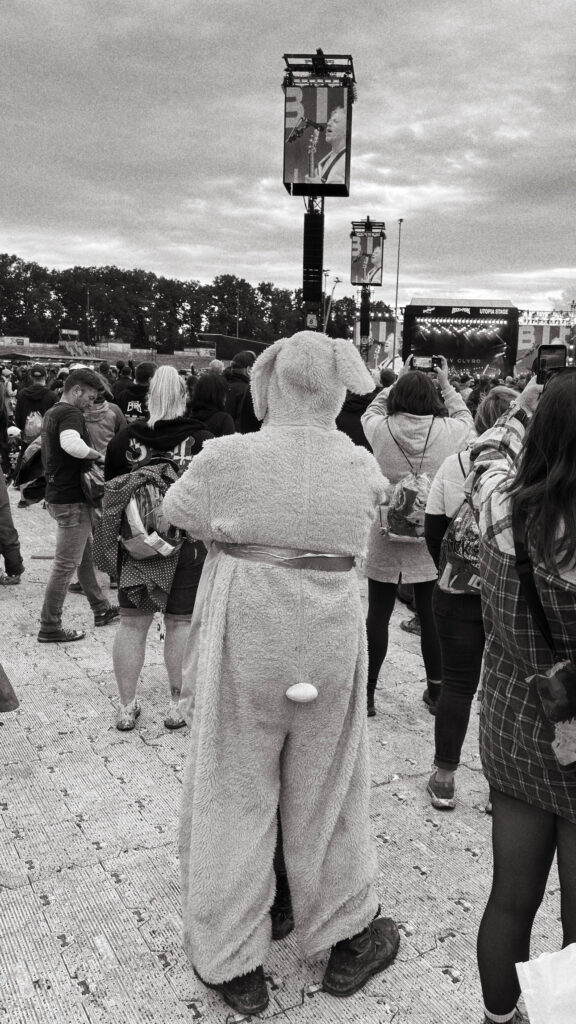
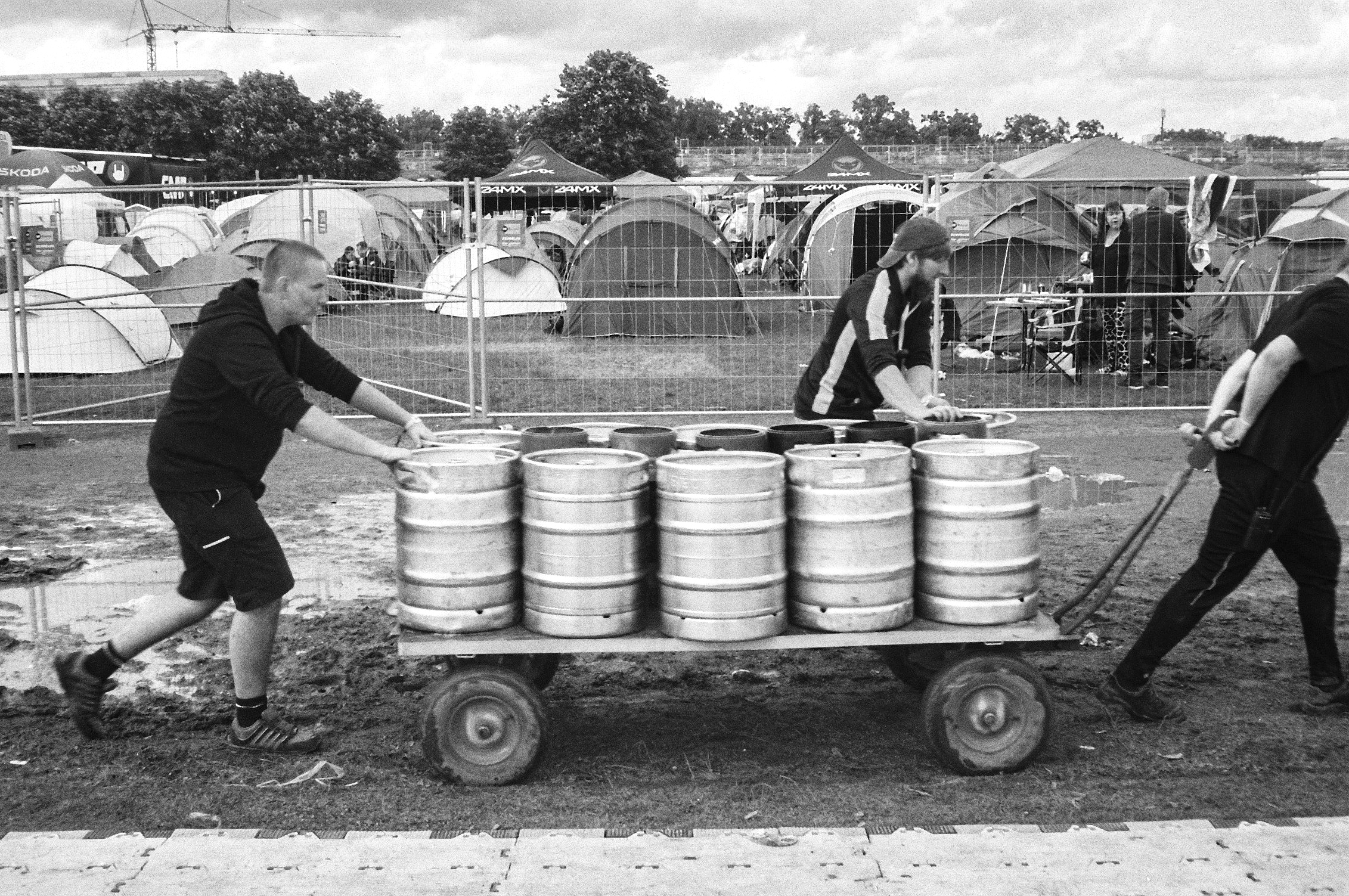
Unfortunately, during the second day of the festival, I dropped the camera into the mud. It stopped working. That moment changed the project. I had to switch to my phone camera to continue documenting. At first, I was disappointed. But later, I realized this change reflected the story of the festival itself: things didn’t go as planned, but the energy continued. The phone allowed me to move quickly and get even closer to people without attracting too much attention.The combination of film and phone photography allow me to photograph in different speeds. Unintentionally both formats became part of the story.
Capture the moment vs. Posing
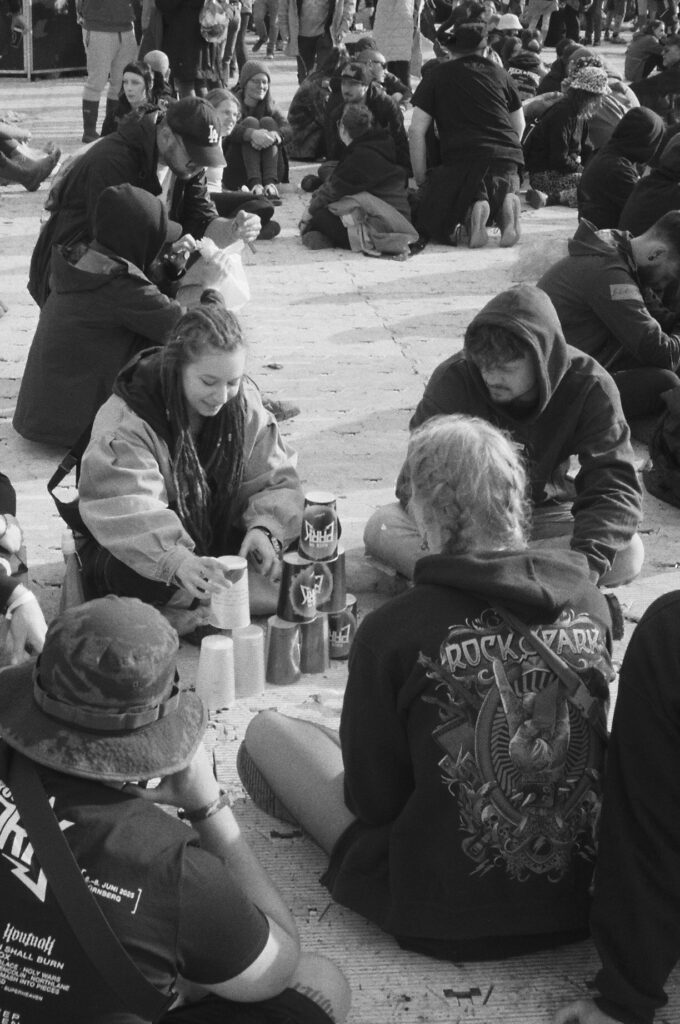
My aim was to capture people unposed, as they were, caught in the moment, expressing themselves freely.
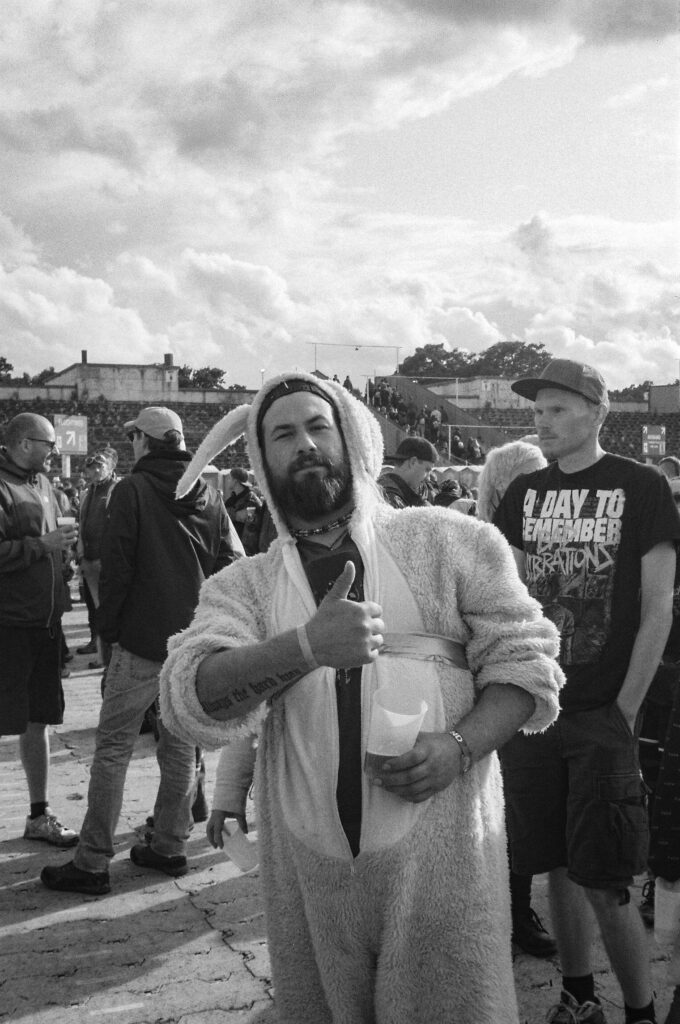
In many photos, people did not even notice I was there. But in some cases, they became aware and decided to pose. These moments still belong in the story, because they show how people want to be seen when they know they are being watched.
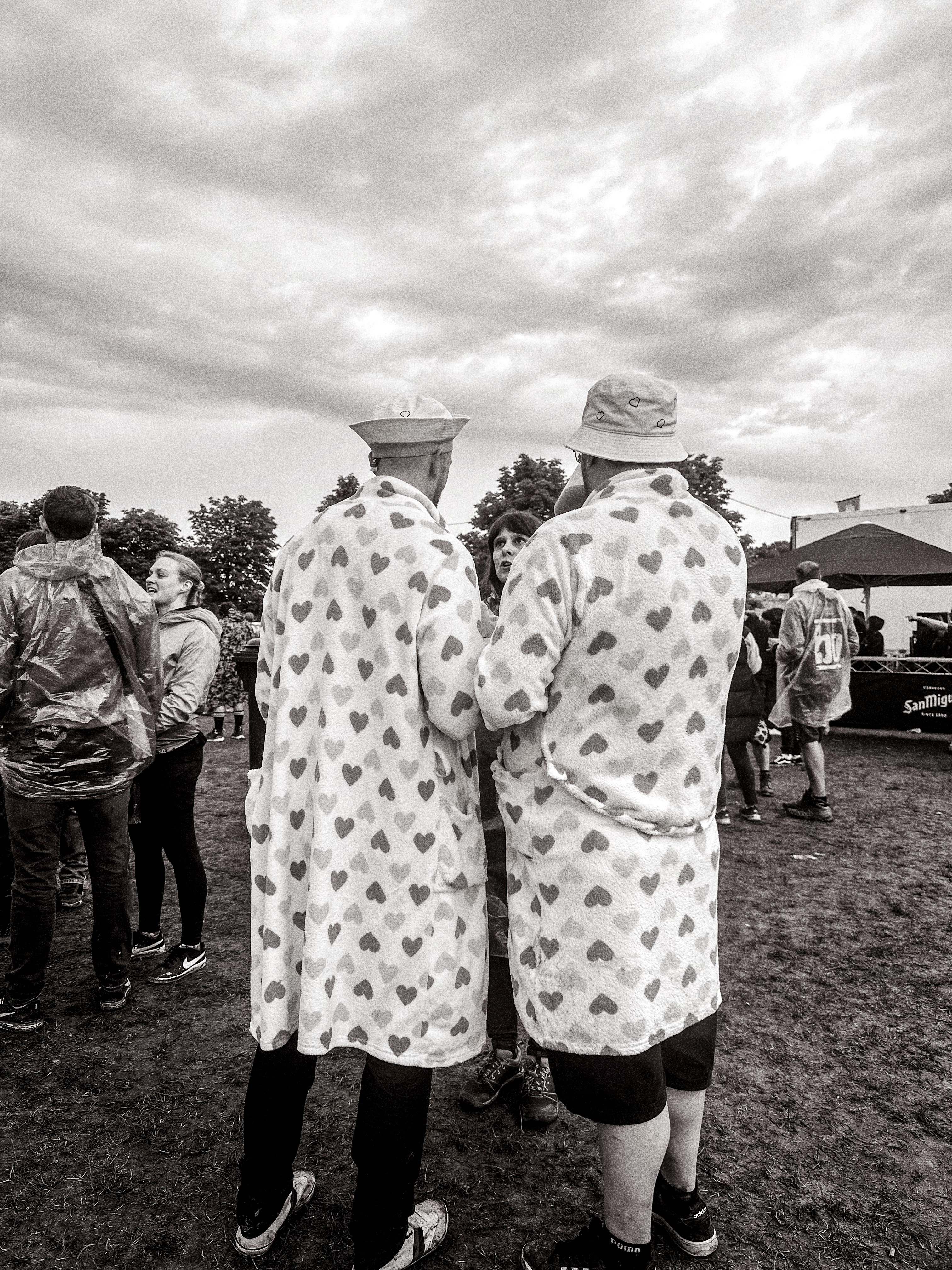
This difference between posed and unposed photography has always interested me. In photography theory, some writers like Roland Barthes suggest that when people pose, they try to show a certain version of themselves, not just how they really are.. In my work, I was especially looking for these unexpected, touching moments, small gestures, tired smiles, muddy shoes, hands in the air. These were often more meaningful than carefully composed scenes.
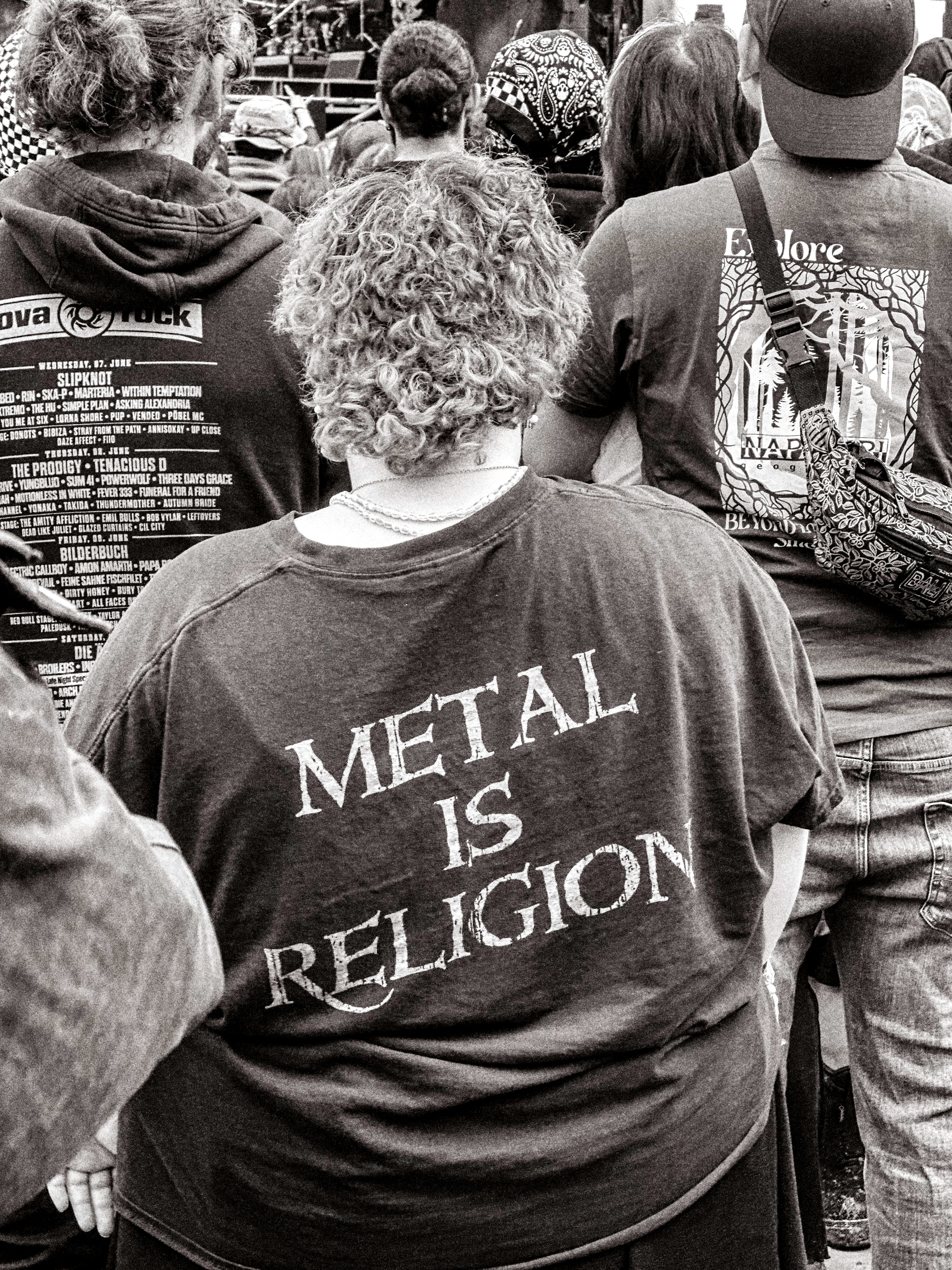
Shooting unposed also required a lot of patience and trust. I didn’t want to interrupt the experience of others. I tried to become part of the crowd, moving slowly, observing quietly. In this way, I was able to find real moments of emotion, where people were lost in music, disconnected from routine, and simply being themselves.
What I found most inspiring about Rock im Park was how people used it as a place of escape. It wasn’t just a party or a concert. It was a chance to leave behind daily responsibilities, jobs, routines, and expectations. In everyday life, many people are careful about how they behave or appear. But at the festival, they could be loud, silent, joyful, or strange without getting judged. I wanted to show this transformation. How people release their stress. How they return to something more natural and honest through music. These images reminded me that photography is not just about capturing people, but about capturing emotion and atmosphere.
A word on capturing strangers
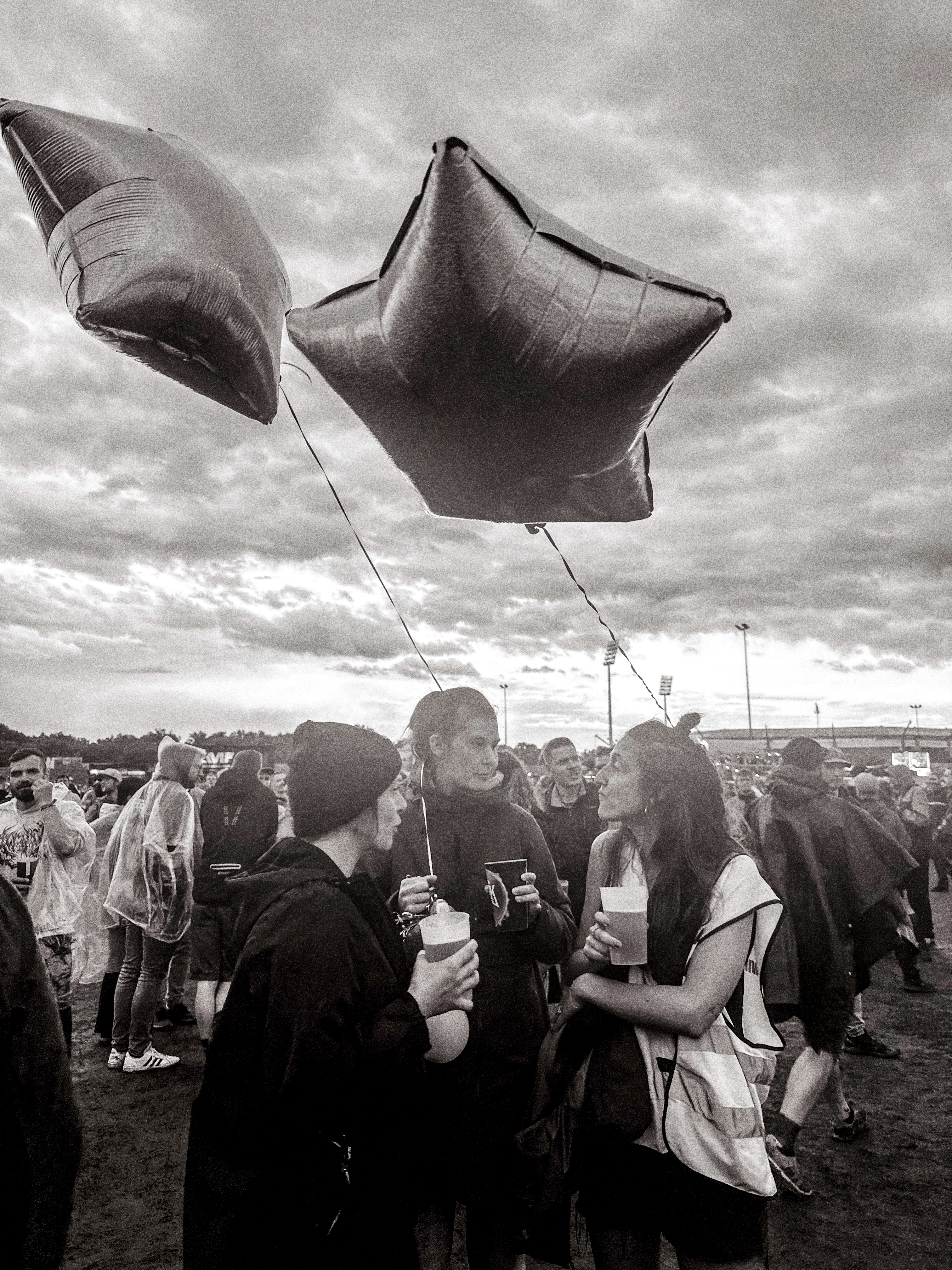
Taking photos of strangers in emotional moments brings ethical questions. We also discussed this in our class. At a festival, people are open, relaxed, and not always aware of the camera. I didn’t ask for permission in most cases, because I wanted to capture the moment naturally. But I always asked myself: Am I showing this person with respect? Am I telling the truth about who they are in that moment?
In her book Regarding the Pain of Others, Susan Sontag argues that images are always created with a certain point of view. There’s the reality and there’s the photographers point of view. What is in or out of the frame is Photographer’s decision and this has a major impact on the the overall narrative.
She questions the ethics of “looking.” She asks what it means to be a spectator to the raw experiences of others, and whether our act of viewing their emotions (even those of joy) is a form of voyeurism.
I have captured moments of vulnerability, joy, and exhaustion. While doing this I have questioned myself if I am an outsider observer or also belong to this group. Am I honoring this experience with my photos ? Do my images create a bond with viewers so that they feel closer or relate to the subjects or am I creating the feeling of otherness by putting a distance with the audience and viewers.
Conclusion
Rock im Park has been a unique experience. From start to the very end I felt the magical experience that others have been doing over and over again for several years.
This project with the photographic approach gave me something new. I have photographed many concerts, but I had never truly looked at the audience as the main subject. This time, the people themselves were the story not just their reactions to the bands, but their relationship with the space, the weather, and each other.
Shooting in black and white helped me focus on expression. Using both analog and phone cameras pushed me to adapt and reflect on my practice. And observing unposed moments helped me stay open to emotion rather than control. Rock im Park became more than just a location; it became a stage for human emotion in its rawest form.
In the end, My Photography is not only about the rain, the music, or the mud. It is about people coming together each year to be part of something bigger. A space where music becomes more than sound; it becomes memory, identity, and connection.
Bibliography
Barthes, Roland. Camera Lucida: Reflections on Photography. Translated by Richard Howard. New York: Hill and Wang, 1981.
Sontag, Susan. Regarding the Pain of Others. New York: Farrar, Straus and Giroux, 2003.
Full Gallery